


Published On 29 Jul, 2026
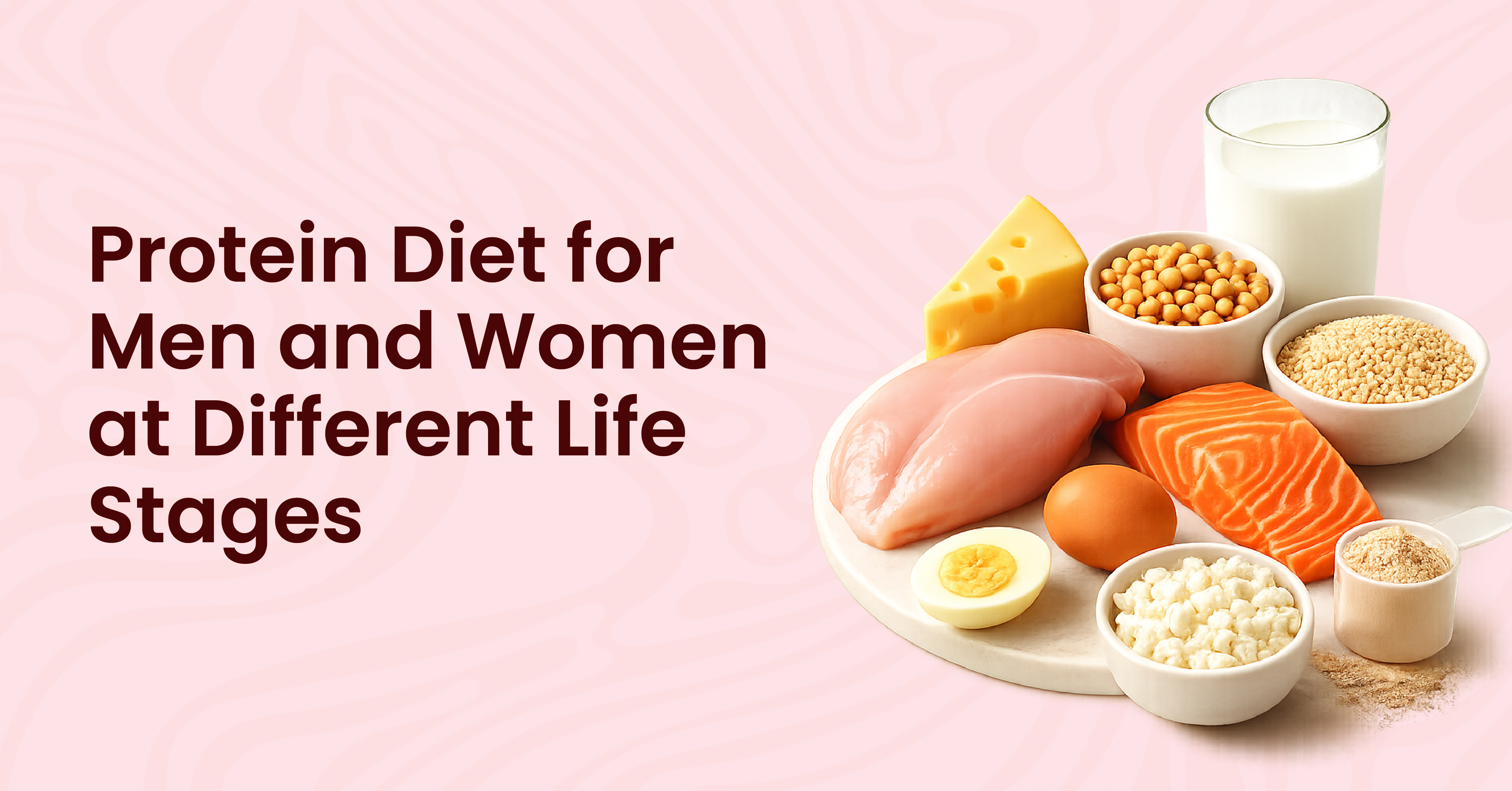
Protein is one of the most important nutrients required for muscle maintenance, tissue repair, hormone production, immunity, and overall wellbeing. However, protein needs are not the same for everyone. Factors such as age, gender, activity level, pregnancy, and ageing can significantly affect daily protein requirements.
Understanding the right protein diet for men and women at different life stages can help support energy levels, healthy ageing, muscle strength, and balanced nutrition.
This article explains protein needs by age, daily protein intake recommendations, high-protein food sources, and practical ways to maintain a healthy, balanced diet throughout life.
Protein is made up of amino acids that help build and repair body tissues.
Protein supports
Why is protein important at different life stages?
Protein supports muscle strength, immunity, tissue repair, metabolism, and overall health. Protein requirements vary by age, gender, activity level, pregnancy, and ageing, making balanced protein intake important throughout life.
Protein needs may differ depending on body weight and lifestyle.
Average recommendations may include
|
Group |
Approximate Daily Protein Requirement |
|
Adult women |
45-55 g/day |
|
Adult men |
55-65 g/day |
|
Pregnant women |
70-75 g/day |
|
Older adults |
Higher intake may be beneficial |
|
Athletes |
Increased protein needs |
Individual requirements may vary depending on medical conditions and activity levels.
Children and teenagers require adequate protein to support
Good options include
Balanced nutrition is important during school years and adolescence.
Women require protein for
Protein intake becomes especially important during pregnancy because it supports
Healthcare professionals may recommend higher protein intake during pregnancy and breastfeeding.
Women may include
Men may require higher protein intake due to
Adequate protein may support
Examples include
As people age, muscle mass naturally declines.
Adequate protein intake may help support
Possible signs include
Older adults should discuss nutritional needs with healthcare professionals.
Examples include
Good vegetarian protein options include
Combining multiple protein sources may support balanced amino acid intake.
Excessive protein intake without balanced nutrition may not be suitable for everyone.
Some individuals with kidney or liver conditions may require dietary supervision.
A healthy meal plan may contain
Protein requirements may change with
Protein needs vary depending on age, gender, body weight, and activity level.
Yes. Well-planned vegetarian diets can provide adequate protein.
Protein may help improve satiety and support muscle maintenance during weight management programmes.
Not always. Many people can meet protein needs through balanced meals.
Eggs, fish, chicken, dairy products, lentils, soy foods, and beans are commonly considered high-protein foods.
Some older adults may benefit from increased protein intake to support muscle preservation.
Yes, but intake should remain balanced and appropriate for individual health needs.
Low protein intake may contribute to weakness, poor recovery, and muscle loss.
Yes. Lentils, soy products, dairy, nuts, and legumes provide valuable protein sources.
A balanced protein diet plays an important role in supporting health, strength, energy, and overall wellbeing at every stage of life. From childhood growth to healthy ageing, understanding protein needs for men and women can help build better daily nutrition habits and long-term wellness.
Pronocte focuses on nutritional wellness and healthy lifestyle support through scientifically developed nutrition solutions designed to complement balanced diets and everyday health goals. With an emphasis on quality nutrition and holistic wellbeing, Pronocte promotes smarter dietary choices for individuals across different life stages.


 Disclaimer
ProNocte is a health supplement and is not intended to diagnose, treat, cure, or prevent any disease.

Call Us
1800 103 4696Email Us
sales@heterohealthcare.comAddress
Sy No. 83/1, Plot No.16/A/1 & 16/A/2, 19th & 20th Floor Hetero Tower, Commerzone, Silpa Gram Craft Village, Madhapur, Hyderabad, Shaikpet, Telangana, India, 500081.Copyright © All Rights Reserved by Hetero Healthcare Limited